
The 15 Best Restaurants in New Orleans
Michelin stars, James Beard finalists, and a 300-year food tradition that just keeps getting more interesting
New Orleans did not need Michelin's approval to know it was one of America's great food cities — but when the inspectors finally arrived in late 2025 for the inaugural Michelin Guide American South, they handed the city three stars, a two-star flagship, and eleven Bib Gourmands in a single afternoon. What that recognition confirms is something locals have always understood: this is a place where a 1941 Creole lunch counter in Tremé, a Senegalese tasting menu on Magazine Street, a Vietnamese king-cake bakery in New Orleans East, and a two-Michelin-star room run by a 22-year-old all belong on the same list. The post-Katrina rebuild matured into a new generation of chefs who honor legacy without being trapped by it. In 2026, the gumbo still matters. So does everything next to it.
Our Selection Methodology
These 15 restaurants were selected based on the inaugural 2025 Michelin Guide American South stars and Bibs, 2026 James Beard Foundation finalist and semifinalist recognition, America's Classics laureates, Eater 38 staying power, coverage by NOLA.com, Garden & Gun, Resy, and The New York Times, and the harder-to-measure metric of genuine local esteem — the places actual New Orleanians still argue about and return to.
We've included everything from $12 roast beef po'boys in Mid-City to a $325 tasting menu in the Warehouse District. What unites them is that each one is doing something a visitor can't replicate anywhere else — and that locals would defend in a bar fight.
Emeril's
Inspired by real photos
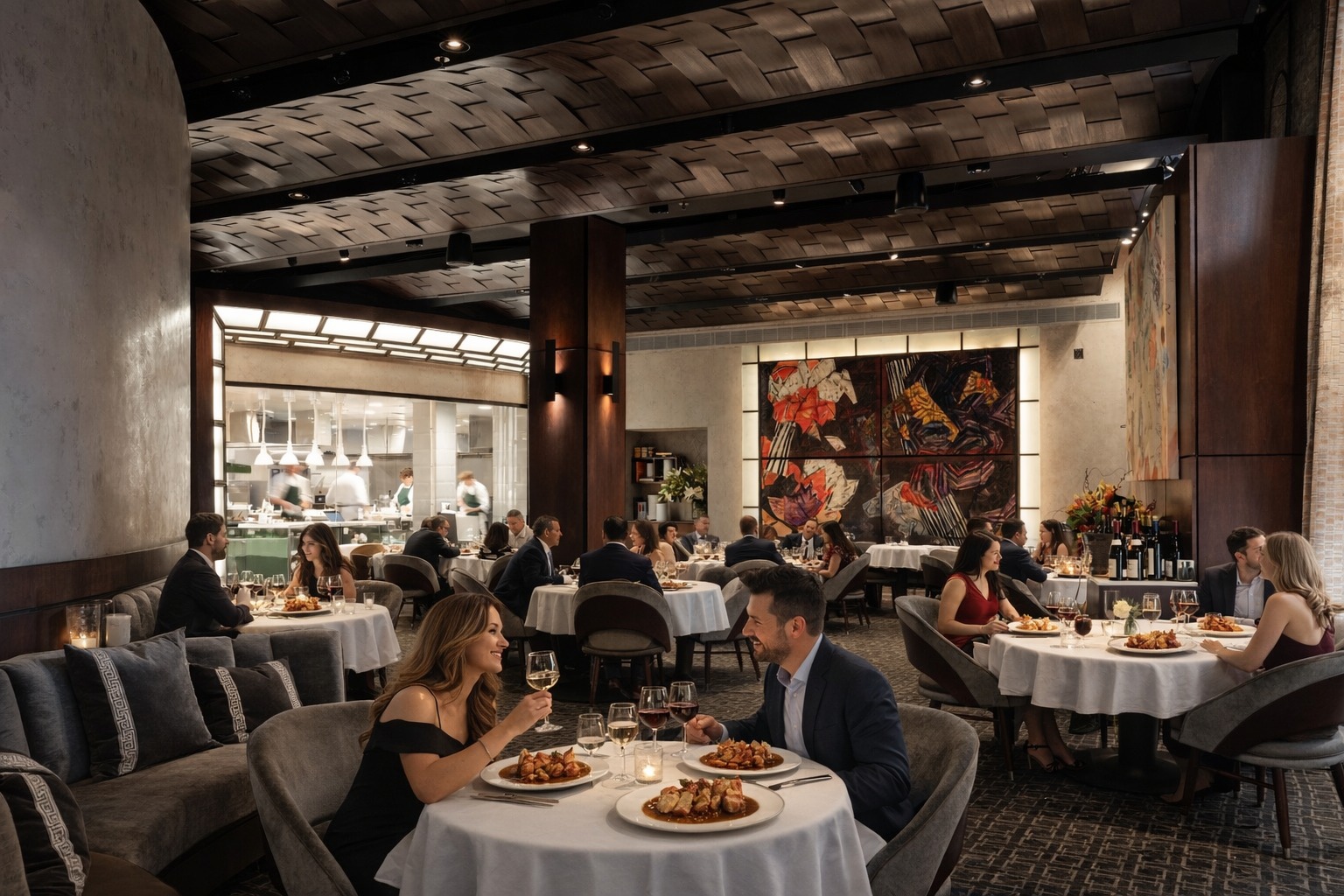
For thirty-five years, Emeril's was the restaurant that turned a local chef into a television brand. In 2022, E.J. Lagasse — Emeril's son, then barely out of culinary school — inherited the kitchen and did something almost nobody saw coming. He stripped the dining room to its studs, killed the à la carte menu, installed a seasonally rotating chef's tasting, and rebuilt the restaurant as a restrained, almost austere temple to refined Louisiana cooking. The inspectors noticed. In the inaugural 2025 Michelin Guide American South, Emeril's was the only two-star in the entire seven-state region, and at 22 E.J. became the youngest chef ever to helm a two-star kitchen. Expect reimagined Lagasse classics — the BBQ shrimp reborn as a tartlet, a gumbo so deeply lacquered it drinks like a consommé, cornbread with brown butter that leaves a mark. The service is precise, the pacing patient, the wine program unfussy but deep. This is the meal that re-announced New Orleans as fine-dining country.
Phone: (504) 528-9393
Signature dish: BBQ shrimp tart — a bite-sized reimagining of Emeril's signature dish, worth the reservation by itself
What to expect: A 2.5–3 hour tasting menu experience. Jackets recommended. Reverent but not uptight.
Price: Tasting menu ~$325 per person; beverage pairing additional
Reservations: Essential. Release via Tock, roughly 60 days out. Sells out fast.
Reserve online: Book a table
Best for: The meal that proves the son lived up to the name, milestone dinners, out-of-towners you want to impress forever
Saint-Germain
Inspired by real photos
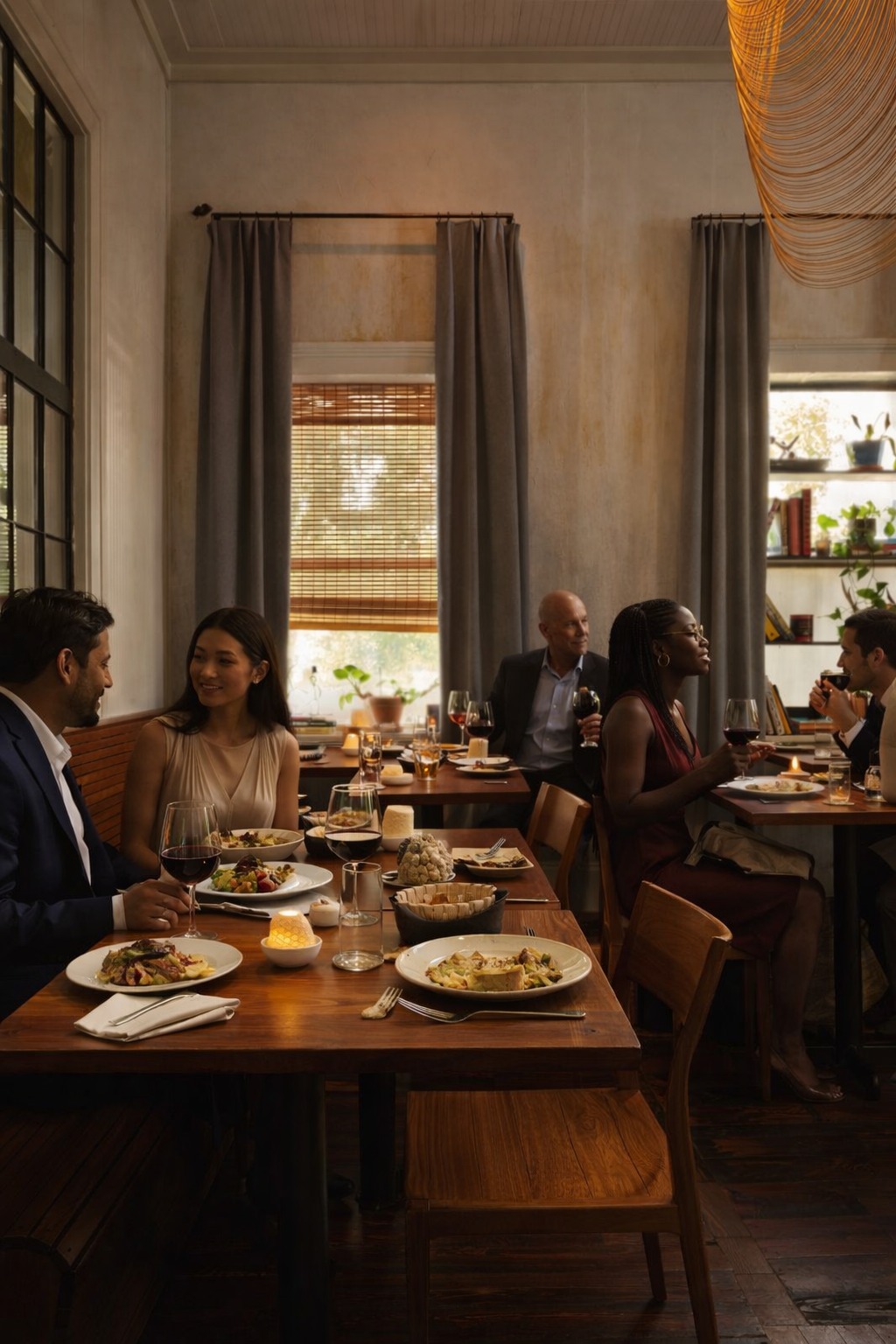
From the sidewalk, Saint-Germain reads like any other shotgun house on St. Claude Avenue — natural wine bar out front, string lights, maybe a dog tied to a porch post. Walk through to the back, though, and twelve seats and a courtyard garden open into what is probably the most ambitious tasting menu in the city. Chefs Trey Smith and Blake Aguillard, who cooked at the two-Michelin-star Corton in New York before opening in 2018, pour every obsession they have into a ten-course progression built around aged butters, house ferments, Carolina Gold rice, and whatever the Gulf is giving them that week. A griddled cornbread cake with cultured butter opens the meal like a signature. Somewhere around course six, a warm cheese soufflé finished with brûléed sugar reframes what cornbread country cooking can be. The Michelin inspectors awarded a star in 2025 and called the place a dissertation on creative culinary technique. They weren't wrong.
Phone: (504) 218-8729
Signature dish: Griddled cornbread cake with house-cultured butter — the opener that sets the tone for the rest of the ten courses
What to expect: Intimate 12-seat back garden and indoor dining room. Relaxed dress, serious cooking. Plan 3 hours.
Price: Tasting menu ~$225 per person; wine pairings additional
Reservations: Essential via Resy. Seatings release a month out and disappear fast.
Reserve online: Book a table
Best for: Wine nerds, tasting-menu obsessives, anyone who thinks New Orleans fine dining means tuxedos and tableside flambé
Zasu
Inspired by real photos
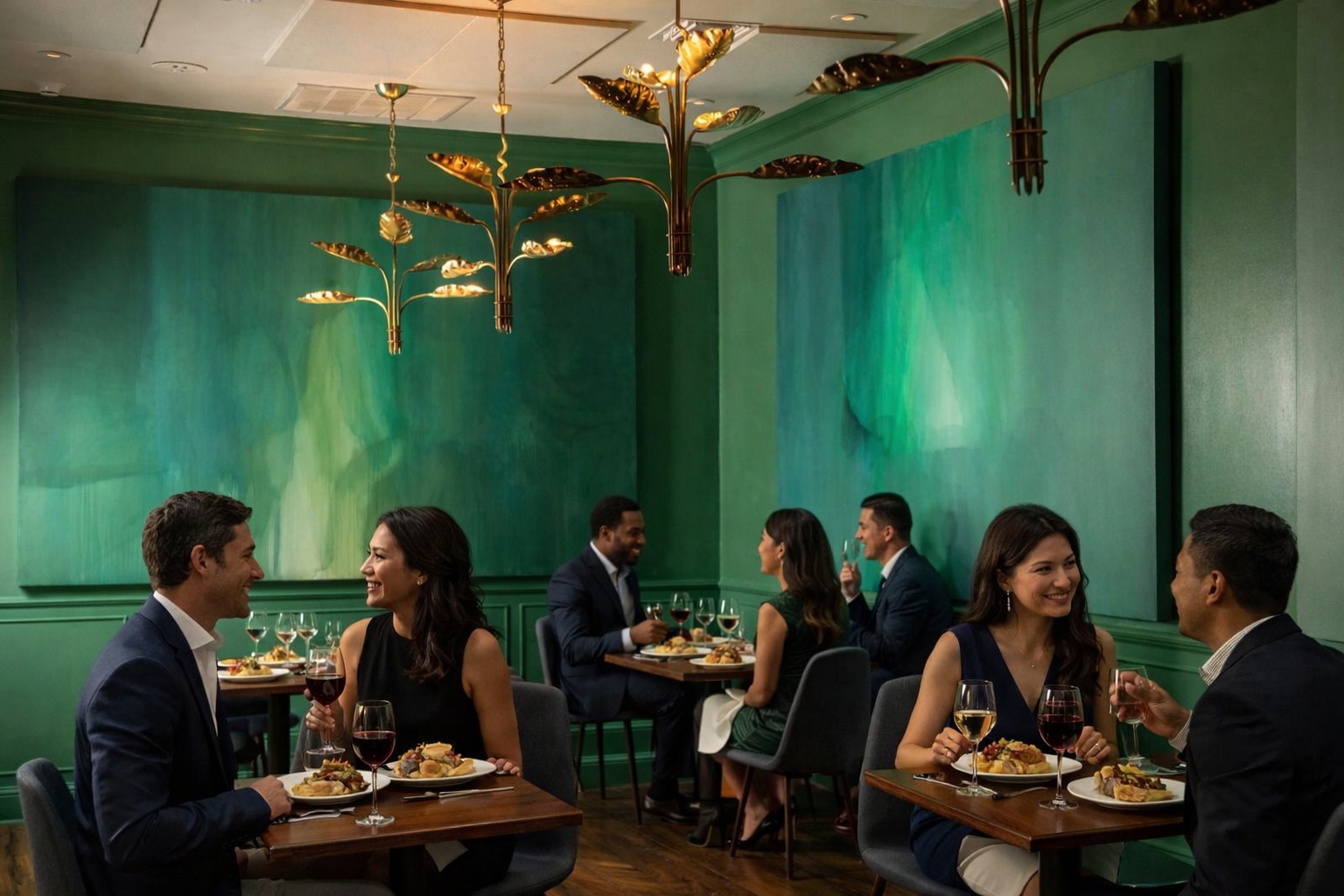
Sue Zemanick won a James Beard Foundation Rising Star award at 29, ran Gautreau's for a decade, and then quietly opened Zasu in a corner Mid-City bungalow on New Year's Eve 2018. The name is Slovak — a nod to her grandmother's kitchen — and the cooking is a genuinely strange and wonderful fusion nobody else in town is attempting: Gulf seafood and Louisiana pantry staples filtered through an Eastern European sensibility. Lentil-and-potato pierogi arrive with a pan sauce that tastes like Creole gravy and borscht had a good conversation. Roasted Gulf fish comes with dill, sour cream, and paprika butter that recontextualizes the whole dish. When the Michelin inspectors handed Zasu a star in 2025, Zemanick spent that evening prepping for dinner service — she hadn't even known she was in the running. Locals had known for seven years.
Phone: (504) 267-3233
Signature dish: Lentil and potato pierogi — Zemanick makes them personally with her sous chef, a dish her grandmother would recognize
What to expect: Neighborhood bungalow with about 40 seats. Warm service, no pretension, serious cooking. Dinner runs 90 minutes to 2 hours.
Price: $80–120 per person à la carte
Reservations: Book two to three weeks ahead via Resy — the dining room is small and the star has made Tuesdays difficult.
Reserve online: Book a table
Best for: The dinner you bring a visitor to when they say they've 'had Creole food before'
Commander's Palace
Inspired by real photos
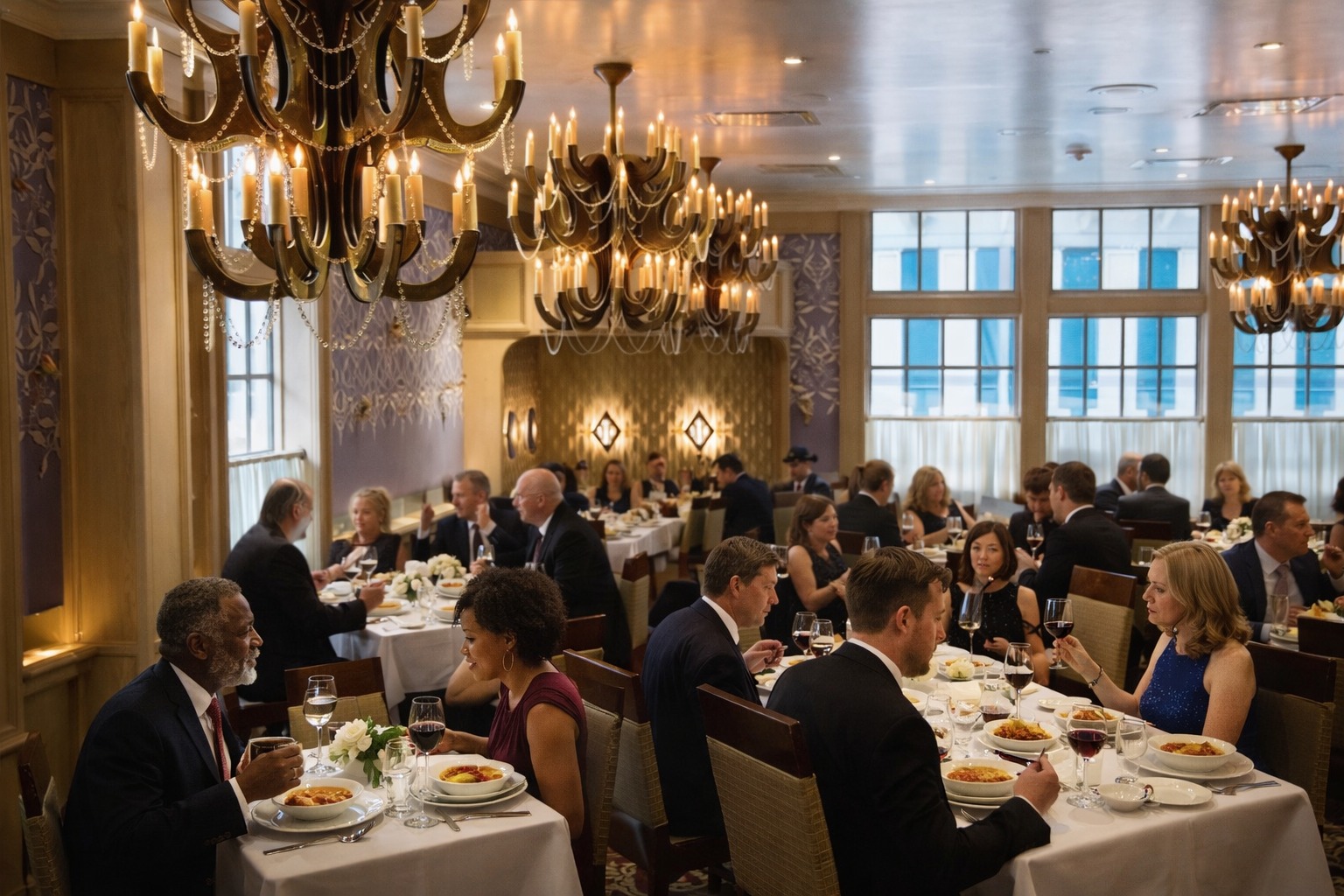
Commander's opened in 1893, and the list of chefs who have run its kitchen — Paul Prudhomme, Emeril Lagasse, Jamie Shannon, Tory McPhail, and now Meg Bickford, the first woman to hold the title — is essentially a short history of modern American cooking. It would be easy for a 130-year-old restaurant in a turquoise Victorian to coast on nostalgia. Commander's does not. Bickford's menu keeps the institutional pillars intact — the turtle soup au sherry, finished tableside and served since opening day; the pecan-crusted Gulf fish; the bread pudding soufflé that arrives in a puff of brown-sugar steam — but she's quietly modernized sourcing and technique in a way that keeps regulars happy and critics awake. Jazz brunch on Saturday and Sunday is still the most New Orleans meal a person can eat, and the $0.25 weekday lunch martinis (three per person, entrée required) remain one of the city's great civic jokes.
Phone: (504) 899-8221
Signature dish: Turtle soup au sherry — on the menu since 1893, finished tableside with a pour of sherry
What to expect: Jackets for men at dinner, lively service, a grande dame of a dining room across three floors. Expect 2–3 hours.
Price: $120–180 per person at dinner; brunch and weekday lunch significantly cheaper
Reservations: Essential. Book via OpenTable 30+ days ahead, especially for weekend jazz brunch.
Reserve online: Book a table
Best for: First-time visitors, anniversaries, Sunday jazz brunches that run into the afternoon
Dakar NOLA
Inspired by real photos
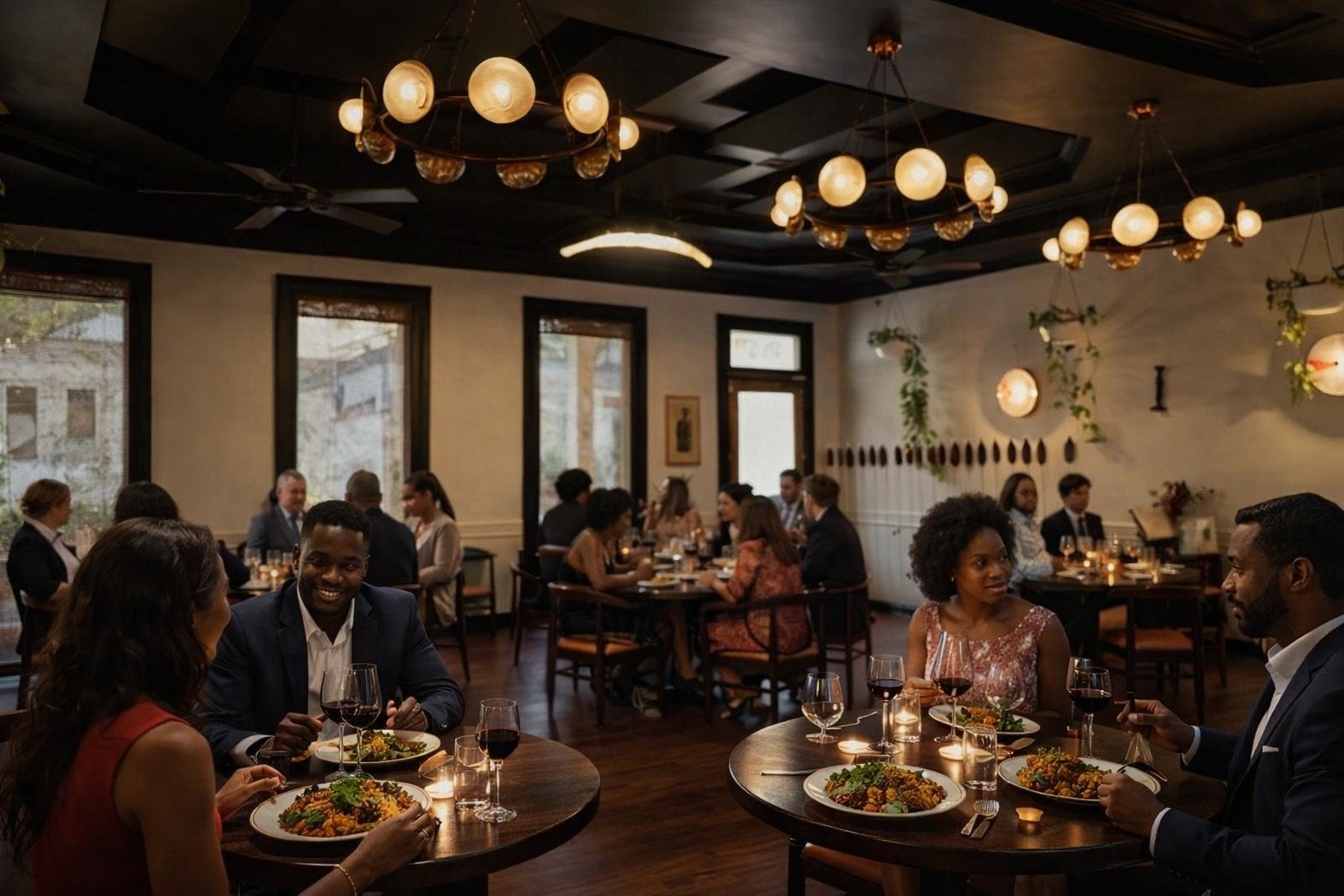
Serigne Mbaye grew up in Dakar and Harlem, cooked at Commander's Palace, L'Atelier de Joël Robuchon in New York, and Atelier Crenn in San Francisco, and returned to New Orleans in 2018 with a simple idea: serve Senegalese food at the level the technique deserves. Dakar NOLA opened on Magazine Street in 2022 as a seven-course tasting, and within two years it had won the James Beard Award for Best New Restaurant, cracked the top ten of North America's 50 Best, and landed Mbaye as a 2026 Best Chef South finalist. The cooking moves between West Africa and Louisiana without forcing the connection — a thiéboudienne clarifies what jambalaya's cousins look like, a millet crepe and Gulf crab course quietly rewires a dish you thought you understood. Mbaye plates much of it himself. The room seats fewer than forty. This is one of the most important restaurants opened in the American South in the last decade.
Phone: (504) 493-9396
Signature dish: Thiéboudienne — the Senegalese national dish, served as a multi-course deconstruction that reframes Louisiana rice cookery
What to expect: Elegant, intimate Uptown townhouse. Single seven-course tasting. Plan 2–2.5 hours.
Price: Tasting menu ~$145 per person; beverage pairings available
Reservations: Essential via Resy. Mbaye's James Beard finalist nod made Wednesdays disappear — book a month out.
Reserve online: Book a table
Best for: Food travelers, anyone who thinks they know the ceiling of the southern food scene
Acamaya
Inspired by real photos
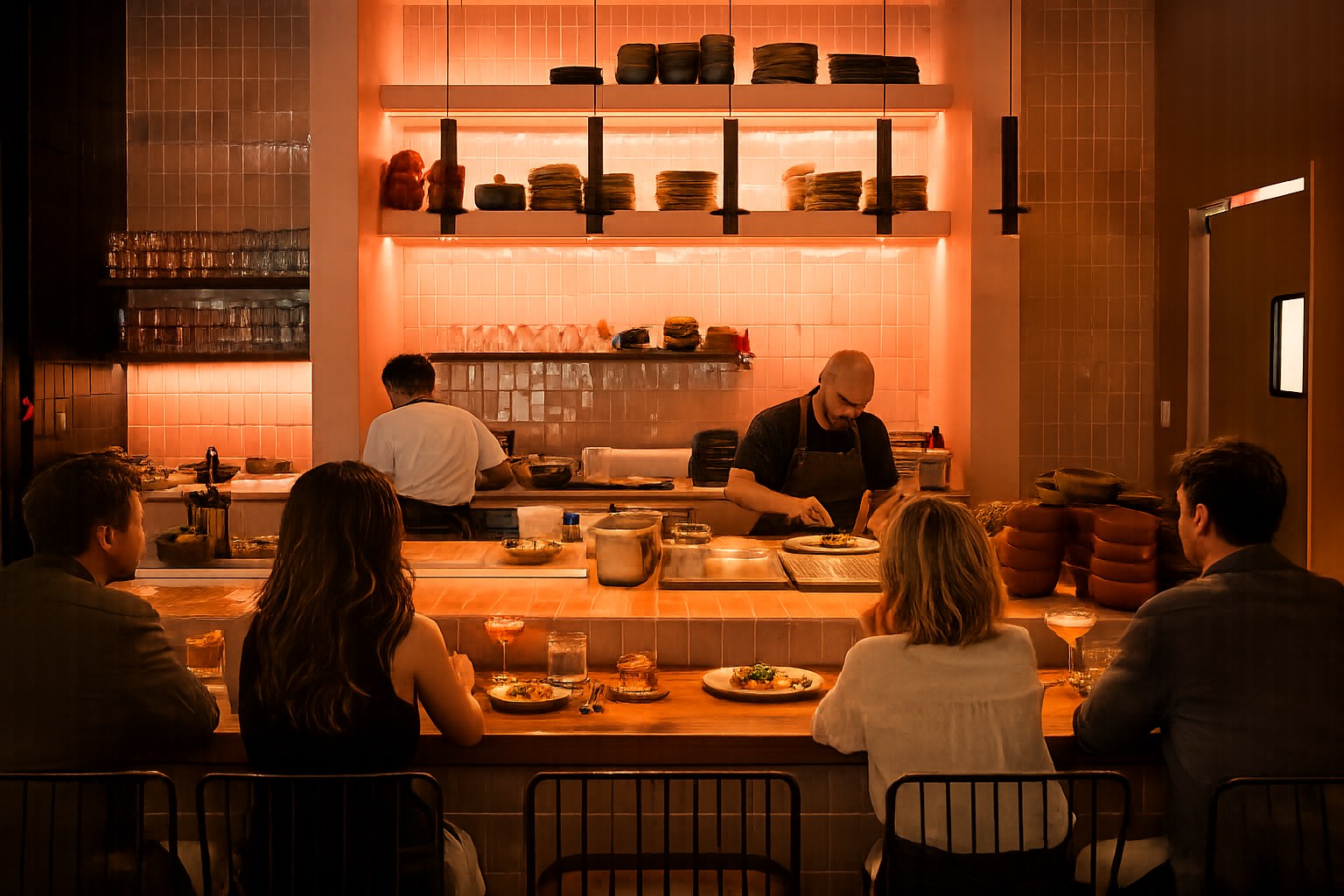
Ana Castro ran Lengua Madre in the Lower Garden District, earned a James Beard finalist nod, closed the restaurant on her own terms, and opened Acamaya in July 2024 with her sister Lydia running the front of house. The Bywater corner space is breezy and plant-filled; the cooking is not gentle. Acamaya means 'freshwater crayfish' in Nahuatl, and the menu orbits around Mexican Gulf seafood with a confidence that never tips into gimmick. Masa-based chochoyotes arrive in a crab-rich broth that reads like a Veracruz gumbo. Aguachile gets a Gulf shrimp treatment, dressed with a chile-and-lime sharpness that cleaves through the humidity. The New York Times gave Acamaya two stars. Bon Appétit put it on the 2025 Best New Restaurants list. Michelin handed it a Bib Gourmand in 2025, and by early 2026 Ana Castro was a Best Chef South finalist — the rare distinction a year removed from opening.
Phone: (504) 354-8994
Signature dish: Crab chochoyotes — masa dumplings swimming in a crab broth that makes Louisiana crab and Mexican corn feel like they were always supposed to meet
What to expect: Sunny, plant-filled corner room. Lively, unfussy. Plan 90 minutes.
Price: $75–110 per person
Reservations: Book via Resy. Weekdays are doable a week out; weekends are a three-week project.
Reserve online: Book a table
Best for: Anyone sick of the idea that Mexican food has to be cheap to be good, double-dates, adventurous solo diners at the bar
Dooky Chase's
Inspired by real photos
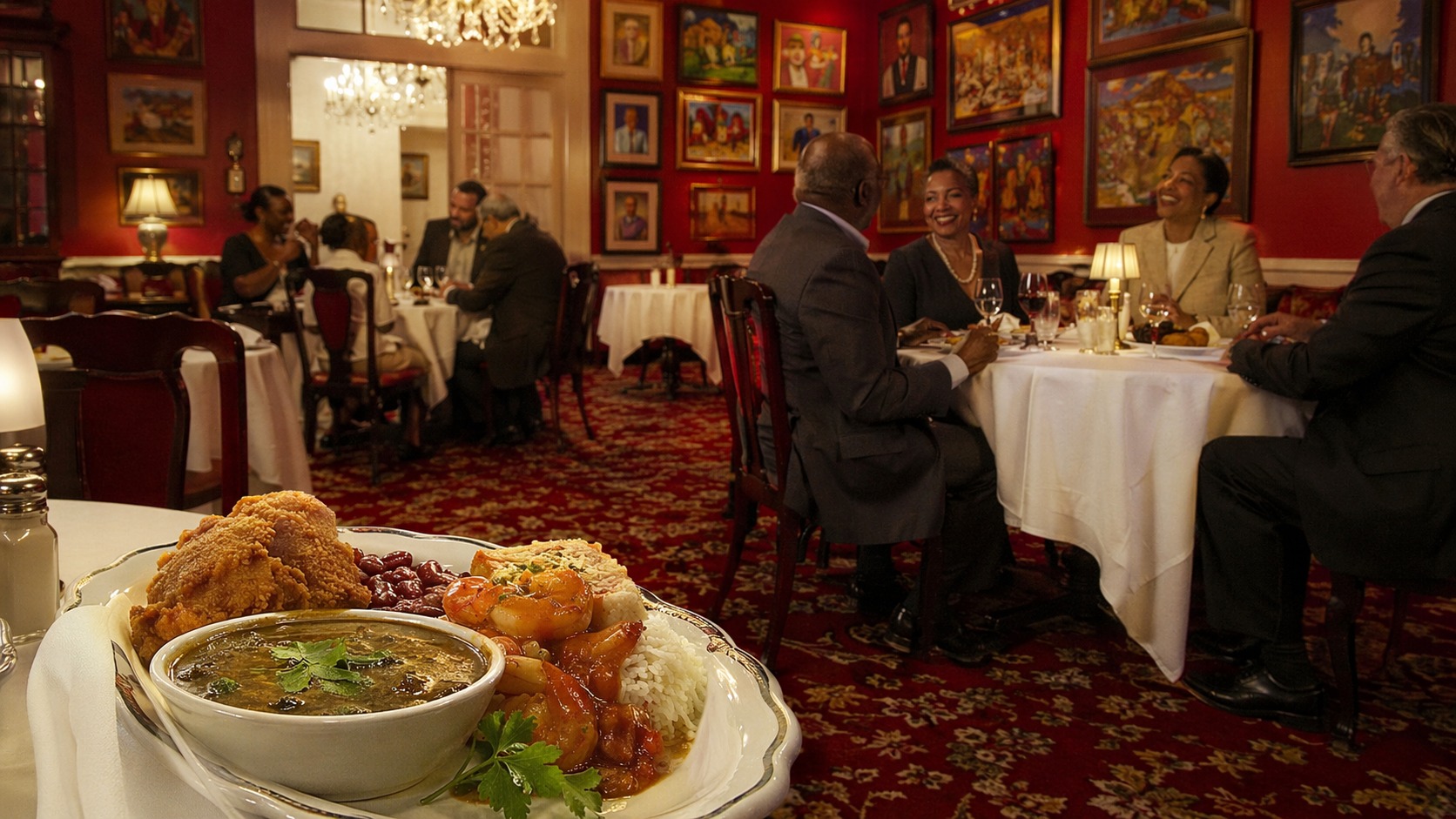
Leah Chase turned a Tremé sandwich shop into the dining room where Freedom Riders strategized, where Thurgood Marshall ate between Supreme Court cases, where Barack Obama and Ray Charles both sat for the same gumbo. She cooked there until she was in her nineties and passed in 2019 — and her granddaughter Stella Chase Reese now runs the room, carrying the menu forward with the same hand. The gumbo z'herbes, a once-a-year Holy Thursday preparation of nine greens and meats that Leah made sacred, is a pilgrimage for people who understand what it means. The rest of the year, it's the fried chicken, the shrimp Clemenceau, the stuffed shrimp, and a white-tablecloth lunch buffet that operates as the civic heart of Black New Orleans. Michelin awarded a Bib Gourmand in 2025. It is one of the few restaurants on this list where that accolade almost seems beside the point.
Phone: (504) 821-0600
Signature dish: Fried chicken and creole gumbo — and if you can plan a trip around Holy Thursday, the legendary gumbo z'herbes
What to expect: Lunch buffet weekdays; dinner Fridays. Warm, civic, unhurried. African-American art collection on every wall.
Price: $30–50 per person at the buffet
Reservations: Not required for lunch buffet. Recommended for Friday dinner and Holy Thursday.
Reserve online: Book a table
Best for: Understanding New Orleans at a level no guidebook touches, Sunday family lunches, history you can eat
Galatoire's
Inspired by real photos
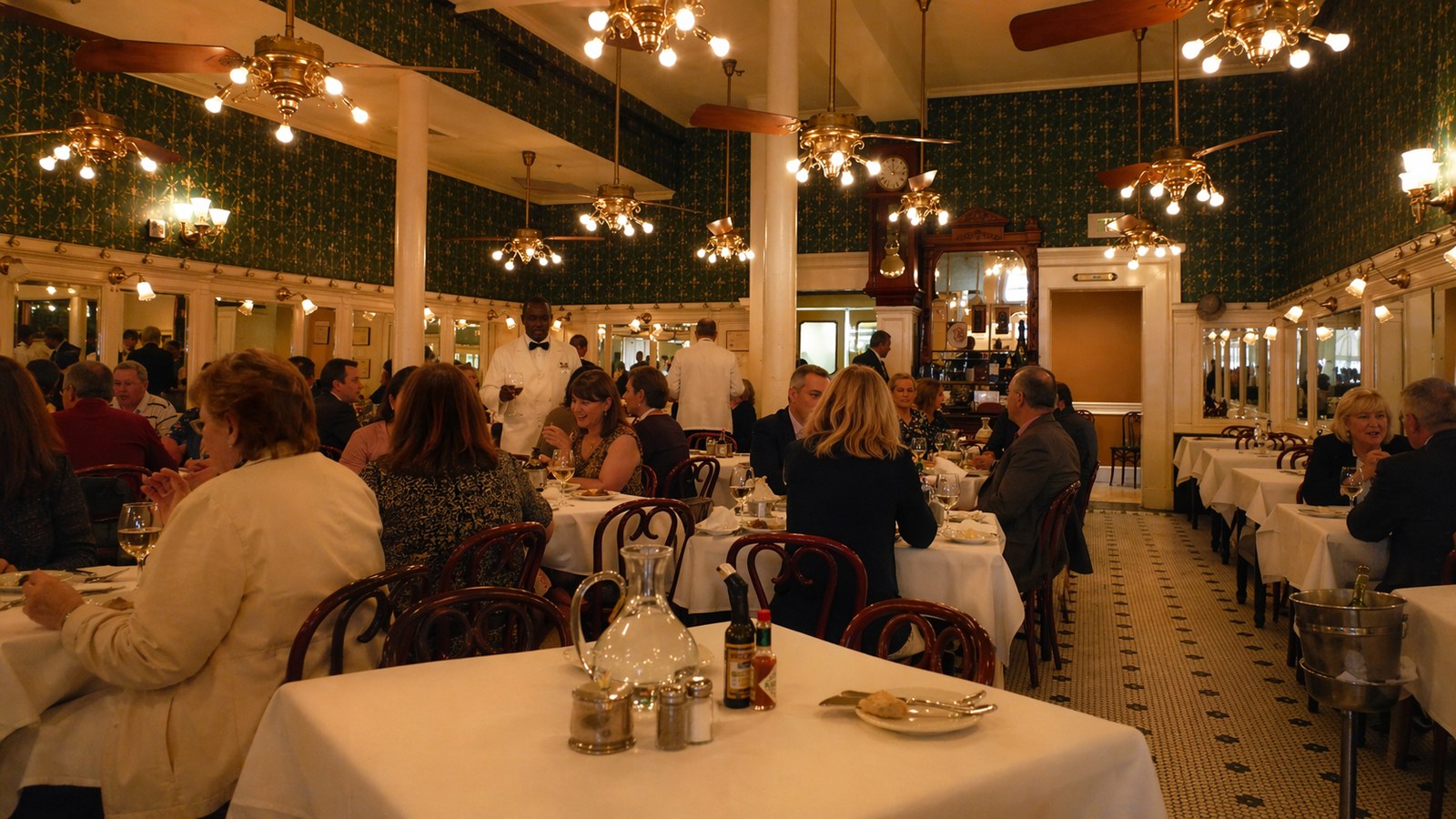
Galatoire's has served French Creole food on Bourbon Street since 1905, and the downstairs dining room — mirrored walls, white tile, ceiling fans, brass coat hooks where old-timers still hang jackets — has not meaningfully changed since. Friday Lunch is the ritual: a capitalized event in New Orleans, a midday affair that runs until the early evening, fueled by bourbon milk punches, long-standing table rivalries, and the occasional serenade. Reservations were only introduced in 2015 — before that, you lined up on Bourbon before eight in the morning. Order the Gulf trout amandine (whole speckled trout, brown butter, toasted almonds, lemon), the shrimp rémoulade, the soufflé potatoes, a bottle of something cold, and do not rush. This is not innovation; this is maintenance at the highest level. In an era where cities lose their landmark restaurants to turnover and real estate, Galatoire's endures because New Orleans still knows what it's worth.
Phone: (504) 525-2021
Signature dish: Gulf trout amandine — whole speckled trout in brown butter with toasted almonds, served exactly the same way for a century
What to expect: Jacket required for men downstairs. Festive, boisterous, especially on Fridays. A meal, not a quick lunch.
Price: $90–140 per person
Reservations: Essential, book 3+ weeks ahead for Fridays. Weekday lunches are easier.
Reserve online: Book a table
Best for: Birthdays, Friday afternoons that become evenings, anyone who wants to understand how New Orleans parties
Compère Lapin
Inspired by real photos
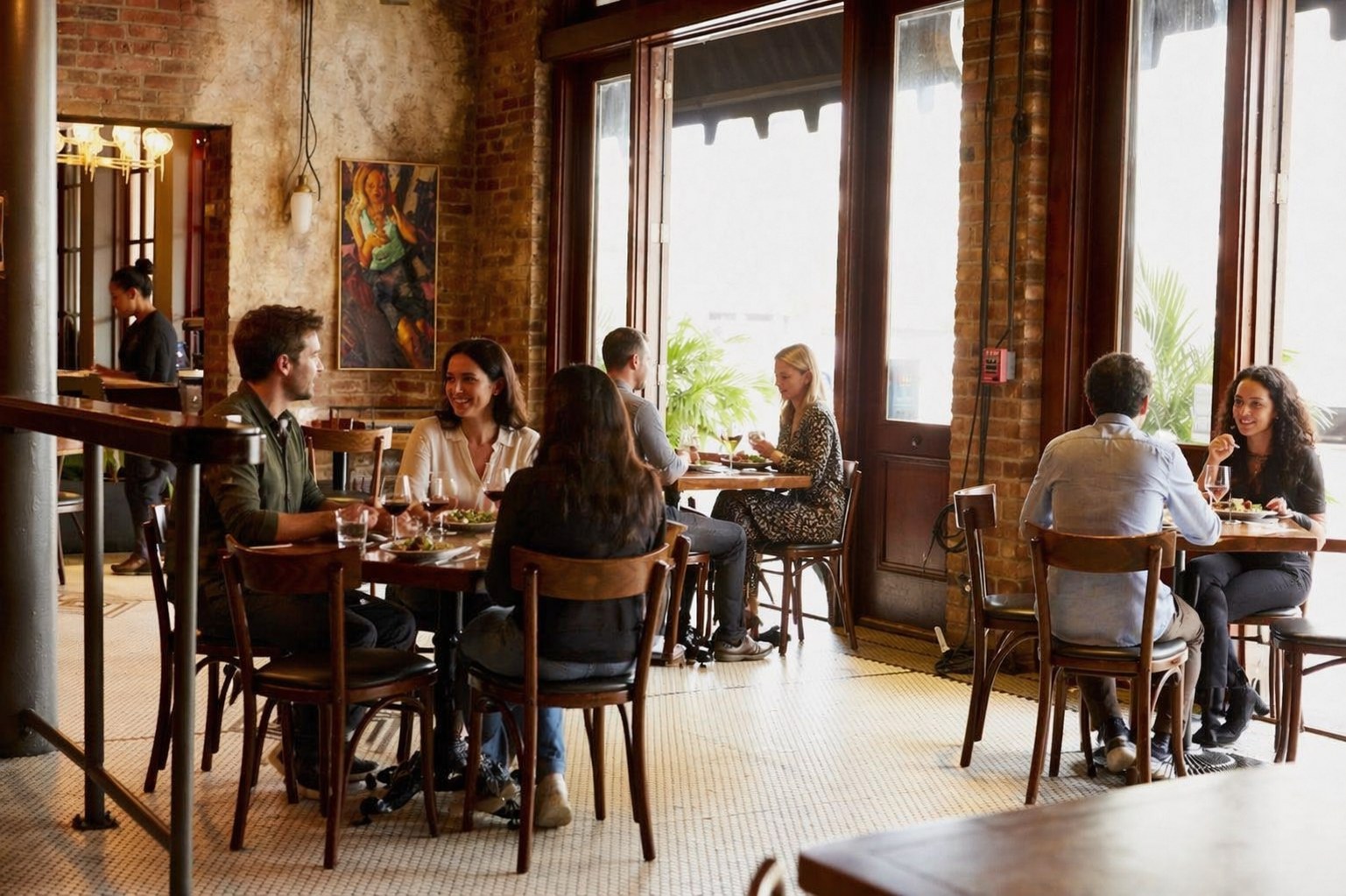
Nina Compton grew up in St. Lucia, staged at Scarpetta, finished second on Top Chef New Orleans in 2014, and stayed. Compère Lapin — named for the trickster rabbit of Caribbean folktale — opened in 2015 in the Old No. 77 Hotel and immediately felt like a restaurant that had always been there. Her cooking braids Caribbean spice, Italian pasta technique, and Louisiana bounty with zero seams. The curried goat with sweet potato gnocchi has become one of the city's genuinely iconic dishes of the last decade. The conch croquettes, the jerk rabbit, the cold smoked tuna — Compton cooks with a confidence rooted in specific memories, not in trendspotting. She won the James Beard Best Chef South in 2018, and in 2026 the restaurant still reads as modern without ever feeling like it's chasing. The bar pours some of the best rum drinks in town. The dining room has the kind of easy glamour that takes decades to build elsewhere.
Phone: (504) 599-2119
Signature dish: Curried goat with sweet potato gnocchi — ten years on, still the dish that defines the restaurant
What to expect: Boutique hotel dining room with proper bar seating, wood floors, and warm service. 2-hour meal.
Price: $70–100 per person
Reservations: Recommended via OpenTable, especially on weekends. Bar is first-come.
Reserve online: Book a table
Best for: Warehouse District date night, a meal that feels celebratory without formality, rum drinkers
Pêche
Inspired by real photos
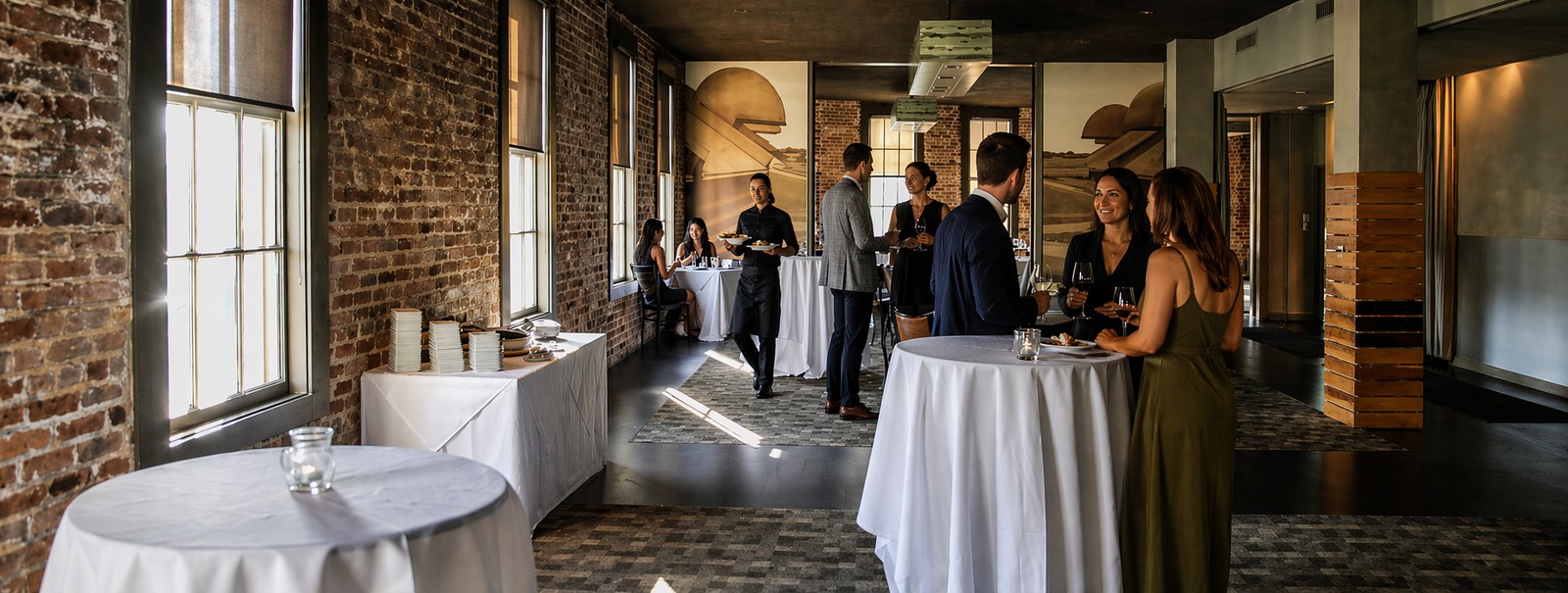
Donald Link and Stephen Stryjewski already had Herbsaint and Cochon when they opened Pêche in 2013 with Ryan Prewitt — their former chef de cuisine — as chef-partner. It won the James Beard Best New Restaurant award within a year, Prewitt won Best Chef South soon after, and more than a decade later Pêche is still the place in New Orleans where Gulf seafood gets the best treatment without getting fussy about it. The open hearth is the heart of the place: whole fish grilled over wood and split tableside, fat Gulf oysters on the half shell, a smoked tuna dip that's become cult, and ground fish collar tacos that are as good as anything on the menu. The Warehouse District dining room is handsome and loud, the wine list is built for seafood, and the staff — genuinely — cares whether you order the amberjack or the redfish. It is a master class in what a modern Southern seafood restaurant can be.
Phone: (504) 522-1744
Signature dish: Whole wood-grilled Gulf fish for two — the unfussy centerpiece that defines what Pêche does best
What to expect: Loud, bustling warehouse conversion with open-hearth fire and a long bar. Smart casual. Plan 90 minutes.
Price: $60–95 per person
Reservations: Book via Resy. Walk-ins seated at the bar and raw-bar counter.
Reserve online: Book a table
Best for: Anyone who thinks they already know Gulf seafood, the first dinner on a New Orleans trip, groups sharing whole fish
Herbsaint
Inspired by real photos
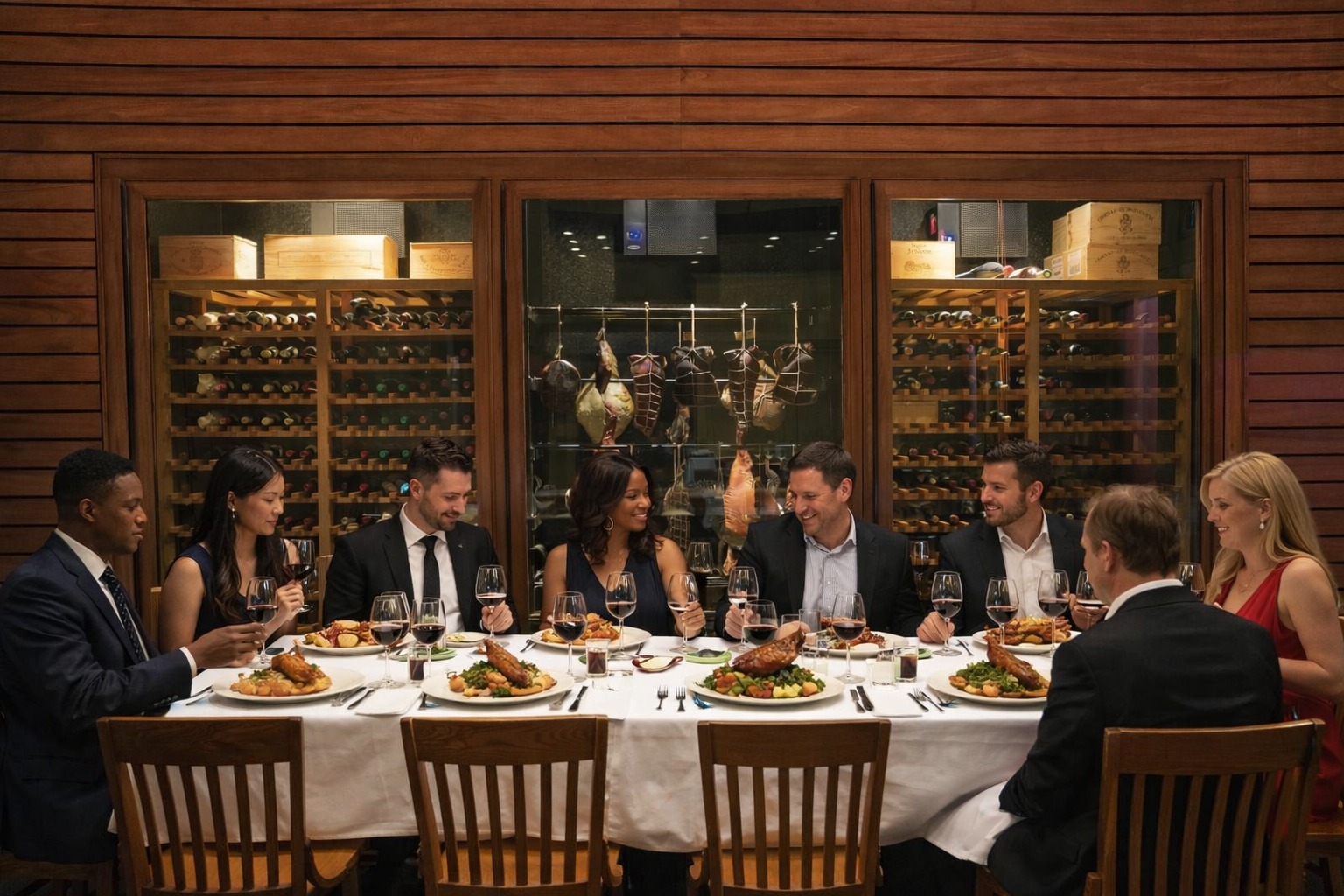
Herbsaint turned twenty-five in 2025, and Donald Link's original restaurant still feels like the best French-Southern bistro in the country. The dining room on St. Charles Avenue is narrow, warm, and loud in exactly the right ways. The cooking leans Cajun and Gascon — a spaghetti carbonara with fried egg and guanciale that has been on the menu for two decades and still shows up on every critic's list, a muscovy duck leg confit over dirty rice that is basically the argument for the restaurant, a gumbo that splits the difference between country and refined. Link and his partner Stephen Stryjewski are 2026 James Beard finalists for Outstanding Restaurateur — recognition for building the Link Restaurant Group (Herbsaint, Cochon, Pêche, Gianna, Cochon Butcher) into one of the most influential restaurant families in the South. Start with a Sazerac at the bar. Stay for the duck. This is the restaurant every other bistro in the South is quietly trying to be.
Phone: (504) 524-4114
Signature dish: Muscovy duck leg confit with dirty rice — the menu standard that every former chef de cuisine now runs their own version of
What to expect: Warm, loud, narrow streetcar-corridor bistro. Smart casual. 90 minutes to 2 hours.
Price: $55–85 per person
Reservations: Book via OpenTable 1–2 weeks ahead. Bar seating for walk-ins.
Reserve online: Book a table
Best for: Post-work dinners, pre-theater meals at the Saenger, anyone who loves a proper bistro
Willie Mae's NOLA
Inspired by real photos
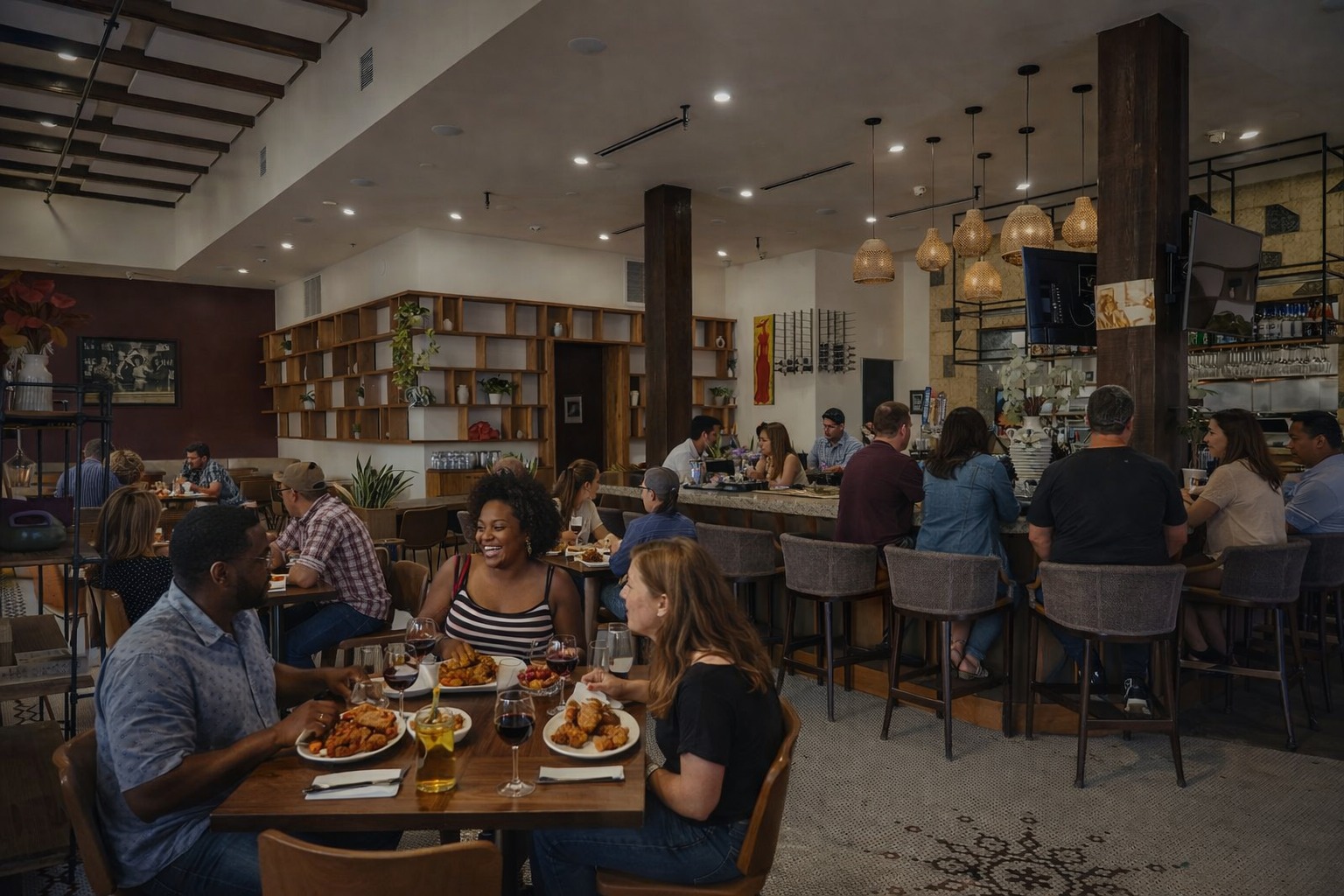
Willie Mae Seaton opened a bar in Tremé in 1957, turned it into a restaurant in the early '70s, and over the next half-century convinced the world her fried chicken was the best in America. The James Beard Foundation formally agreed in 2006 with an America's Classic designation. Then, in April 2023, a fire gutted the original St. Ann Street location. The family — led by Willie Mae's great-granddaughter Kerry Seaton Stewart — rebuilt, reopening a downtown flagship in late 2024 that carries the same recipe forward without losing the soul. The chicken remains the point: a wet spicy batter, deep-fried to a crackling lacquered crust, impossibly juicy underneath. The red beans and rice, the butter beans, the cornbread — all essential. Lines still form at lunch. This is not nostalgia cooking. It is a family recipe that has been refined for seventy years and tastes like it.
Phone: (504) 509-6311
Signature dish: Fried chicken — the dish that has held the 'America's Best' title from every publication that matters
What to expect: Casual counter and table service. Quick turnover. Cash-friendly, straightforward.
Price: $20–35 per person
Reservations: Not accepted. Lines are long at peak lunch and dinner; arrive off-peak.
Reserve online: Book a table
Best for: Lunch with out-of-town family, the sandwich of a lifetime, proving there is a thing as perfect fried chicken
La Petite Grocery
Inspired by real photos
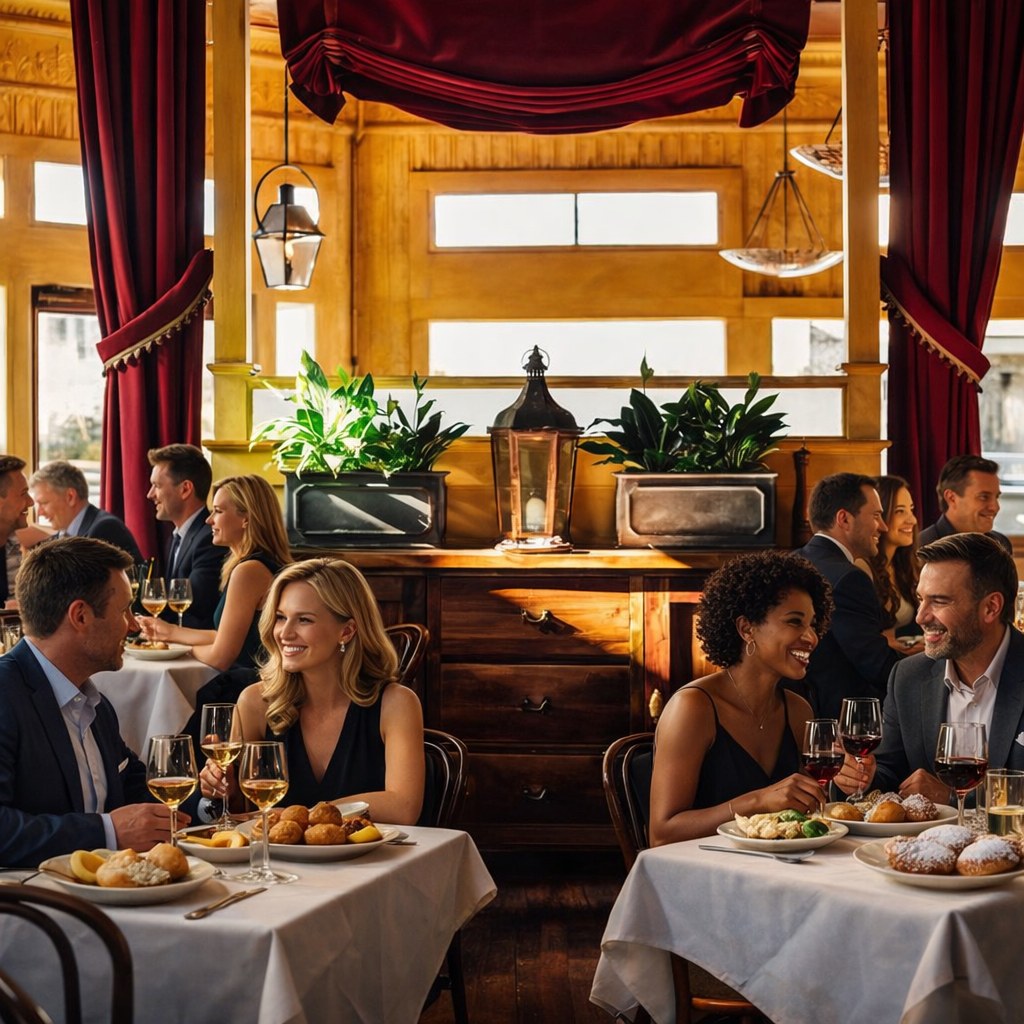
Justin Devillier bought La Petite Grocery in 2004 when it was still trading on being an 1800s-era neighborhood market, and over twenty years he's turned it into one of the most quietly beloved restaurants on Magazine Street. The wood-paneled corner room, the pressed-tin ceiling, the banquettes by the window — it all feels like it was always there. The cooking is contemporary Creole that honors the form without being imprisoned by it. The blue crab beignets with malt vinegar aioli are the dish every first-time visitor orders and every local still orders anyway. The turtle bolognese over pappardelle is a quiet masterpiece. The panéed rabbit, the Gulf fish, the weekly blackboard specials — all of it lands. Devillier won the James Beard Best Chef South in 2016, and in 2026 La Petite still feels like a chef's restaurant run by a chef who cares about exactly this room, exactly this block, exactly these regulars.
Phone: (504) 891-3377
Signature dish: Blue crab beignets with malt vinegar aioli — two decades and still the best opener on Magazine Street
What to expect: Classic Uptown neighborhood bistro. Warm, lived-in, reliably excellent. 90 minutes.
Price: $65–95 per person
Reservations: Book via OpenTable a week out. Bar seating for walk-ins.
Reserve online: Book a table
Best for: Locals-feel Uptown dinner, the second or third meal on a trip when you want something less showy, wine drinkers
Dong Phuong Bakery
Inspired by real photos
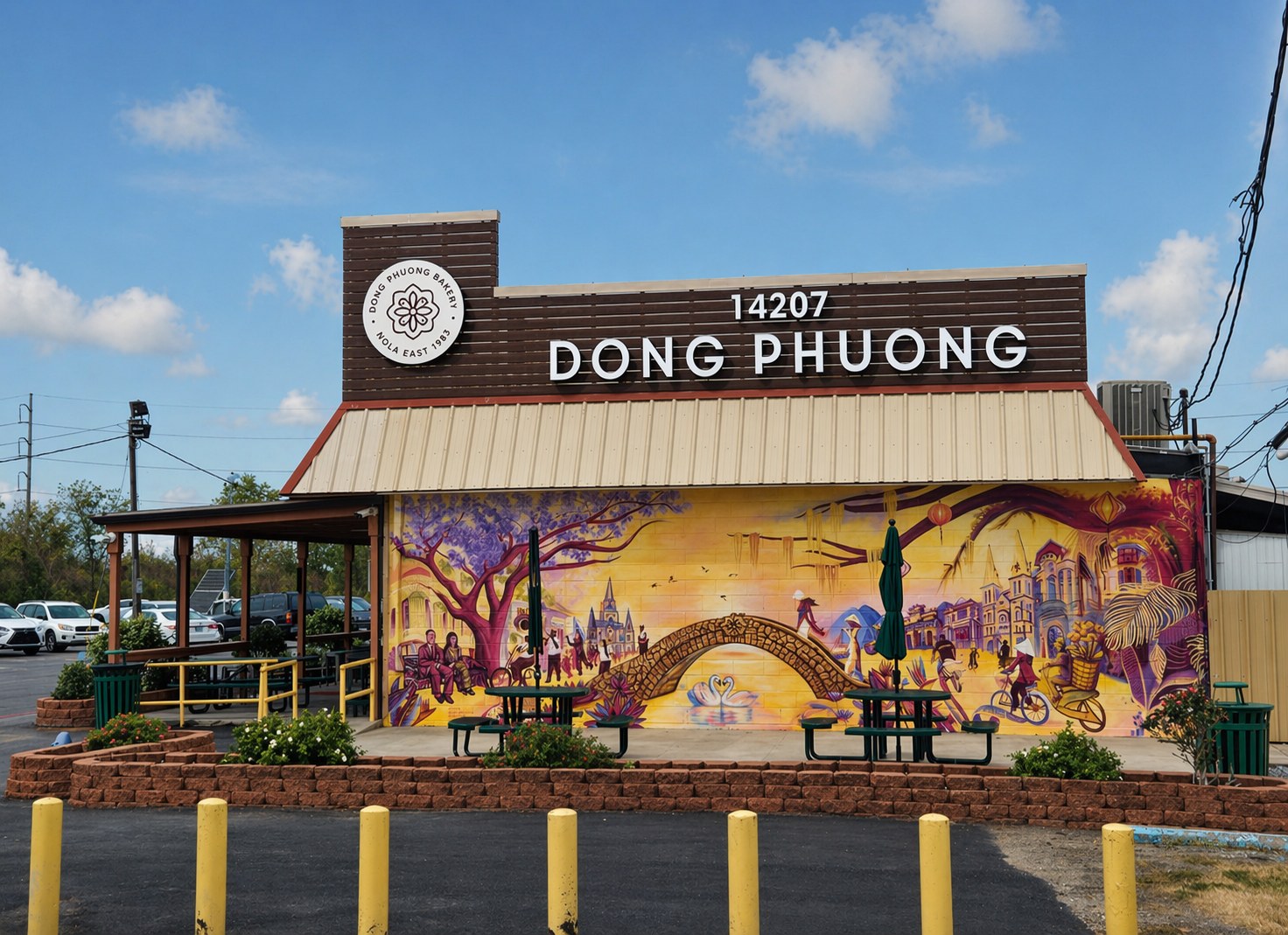
Every great banh mi in New Orleans sits on a Dong Phuong baguette — including the ones served at places twenty miles away. De and Huong Tran opened the bakery in 1982 in Eastern New Orleans's Little Vietnam, baking the miniature French-Vietnamese loaf that the post-war Vietnamese community needed. Forty years later, Dong Phuong supplies much of the city's po'boy bread, pours out mooncakes in fall, and produces the king cake that has become the king cake — the single pastry most New Orleanians agree on. Lines form around the block during Carnival. The James Beard Foundation named Dong Phuong an America's Classic in 2018, and the banh mi counter — pâté, Chinese sausage, barbecue chicken, aioli, pickled daikon, cilantro — is what keeps locals coming all year. This is not a quick detour; New Orleans East is a twenty-minute drive from the French Quarter. Go anyway. It is one of the most important Vietnamese bakeries in the United States.
Phone: (504) 254-0214
Signature dish: The classic banh mi — pâté, Chinese sausage, BBQ chicken, pickled vegetables, aioli, cilantro, on Dong Phuong's own baguette
What to expect: Counter service bakery, casual, bilingual, efficient. Dine-in tables are basic. Cash-friendly.
Price: $8–15 per person
Reservations: Not accepted. Expect a line during Carnival king cake season (Jan–March); otherwise walk in.
Reserve online: Book a table
Best for: Breakfast on a Saturday, a banh mi pilgrimage, king cakes to ship home
Parkway Bakery & Tavern
Inspired by real photos
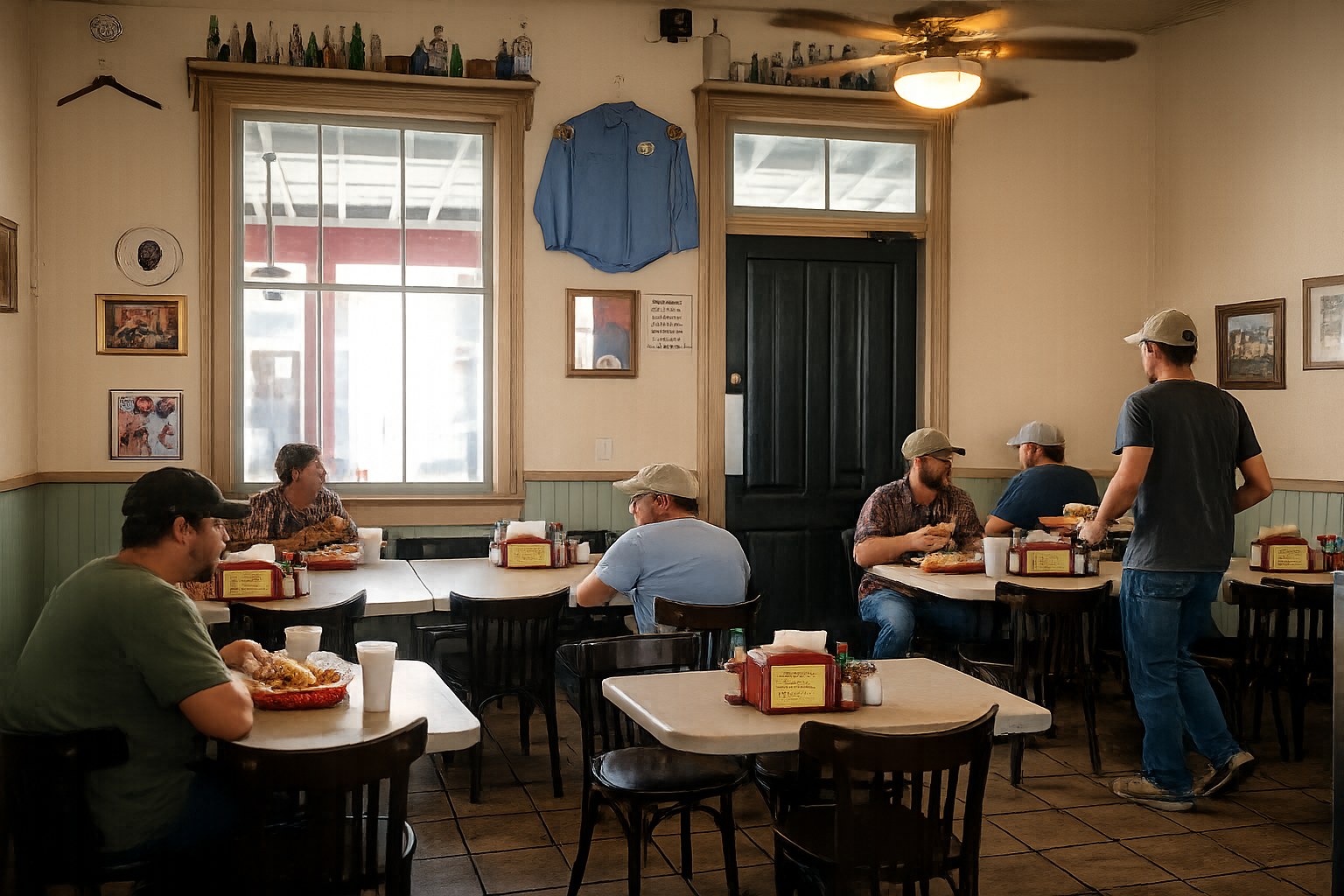
Parkway has been on the corner of Hagan and Toulouse since 1911 — a 114-year-old tavern that stayed a working po'boy shop through Prohibition, Katrina, and the long New Orleans diaspora. The roast beef po'boy is the point: over a thousand pounds of beef a week, slow-cooked until every strand shreds, drowned in fifty gallons of house gravy, piled into a Leidenheimer loaf that sags the instant you pick it up, and served with napkins because pretending otherwise is absurd. Michelin handed Parkway a Bib Gourmand in 2025 — the institutional recognition locals had been waiting on. But the real proof is the lunch line out the door, every day, a mix of judges, plumbers, tourists, and neighborhood kids holding a ten-dollar bill. Other po'boys exist. A lot of them are excellent. None of them are Parkway.
Phone: (504) 482-3047
Signature dish: The roast beef po'boy — gravy-drowned, Leidenheimer-crusted, dressed with lettuce, tomato, pickles, and mayo
What to expect: Order at the counter, grab a number, find an outdoor picnic table or a spot at the tavern bar. Fast and happy.
Price: $12–18 per person
Reservations: Not accepted. Line moves fast. Peak lunch is 12–1:30.
Reserve online: Book a table
Best for: Lunch on a walking day, the sandwich that defines a city, taking a teenager who says they don't eat beef
Exploring New Orleans's Food Scene by Cuisine
Haute Creole & Fine Dining
The Michelin Guide's arrival in 2025 did not invent New Orleans fine dining — Commander's Palace, Galatoire's, and Herbsaint had all done the work over decades. What the stars confirmed is that the tradition is in better hands than ever: Emeril's under E.J. Lagasse, Zasu under Sue Zemanick, and Saint-Germain in the Bywater all prove haute Creole is a living category, not a museum piece.
Modern Senegalese & West African
Dakar NOLA's James Beard Best New Restaurant win in 2024 put Senegalese fine dining on the American map for the first time. Chef Serigne Mbaye's cooking draws the direct line from Dakar to New Orleans — rice cookery, slow-braised stews, and Gulf proteins — in a way that reframes Louisiana's own Afro-Creole roots.
Vietnamese Creole
New Orleans has one of the oldest and largest Vietnamese-American communities in the South, concentrated in New Orleans East. Dong Phuong Bakery's baguette is the structural foundation of most of the city's po'boys, and its Americas Classics-winning king cake is the pastry locals agree on. The Vietnamese-Creole crossover is not a trend — it is part of how this city eats.
Po'Boys & Gulf Seafood
The dressed po'boy — roast beef, fried shrimp, or oyster — is the city's signature sandwich, and Parkway Bakery has been perfecting the roast-beef version since 1911. Gulf seafood remains the central protein across every price point, from Parkway's fried-oyster loaf to Pêche's whole wood-grilled fish in the Warehouse District.
Caribbean-Creole Fusion
Nina Compton's Compère Lapin and Ana Castro's Acamaya represent a newer lineage — chefs drawing on St. Lucian and Mexican traditions respectively and treating Louisiana as the meeting ground. Curried goat with sweet potato gnocchi and masa dumplings in crab broth are not Creole in the traditional sense, but they feel native to the city in a way only New Orleans could accommodate.
Soul Food & Southern Classics
Dooky Chase's Creole gumbo and Willie Mae's fried chicken carry the soul-food tradition at the highest level, both earning James Beard and Michelin recognition. These are not tourist menus — they are the daily food of Black New Orleans, passed through families across generations and still cooked the right way.
Where to Eat: New Orleans by Neighborhood

Warehouse District
The post-industrial downtown neighborhood that quietly became New Orleans's most ambitious restaurant row. Emeril's earned two Michelin stars here; Compère Lapin and Pêche anchor the block-long stretch of Tchoupitoulas; Willie Mae's rebuilt its flagship a short walk away. Once a neighborhood of coffee warehouses and cotton brokers, now it's where national critics book first — and where locals go when they want the kitchen with no training wheels.

French Quarter
Yes, it's touristed. Yes, Bourbon Street has Lucky Dog carts. Now look around. Galatoire's has served trout amandine since 1905, Brennan's still flames bananas Foster tableside, and a half-dozen Michelin-recognized restaurants line the grid between Esplanade and Canal. The Quarter rewards the visitor willing to ignore the neon and walk into the rooms where New Orleans eats its own history.

Garden District
Turquoise Victorians, streetcar lines, and oaks that predate Louisiana statehood. The Garden District is the genteel heart of upscale New Orleans dining — anchored by Commander's Palace, Coquette, and a handful of newer tasting-menu rooms. This is where special-occasion dinners happen, where the white-tablecloth tradition still holds, and where a jacket is not a suggestion.

Bywater
Downstream of the Quarter and the Marigny, Bywater is the artists' and musicians' neighborhood that now holds a Michelin star (Saint-Germain) and a Michelin Bib (Acamaya). Shotgun houses, corner bars, murals, and some of the most forward-thinking cooking in the city. Come for dinner at sundown and stay for a drink at whatever natural wine bar is open that night.

Uptown & Magazine Street
The long Magazine Street corridor runs the full spine of Uptown, threading together oyster bars, antique shops, and some of the city's most important restaurants. Dakar NOLA, La Petite Grocery, Clancy's, and Coquette all sit on or near it. This is dining at the pace New Orleans actually keeps — long lunches, neighborhood bistros, and wine lists that reward patience.

Mid-City & Tremé
Inland and older, these neighborhoods hold the soul of the city's everyday cooking. Tremé is home to Dooky Chase's, Li'l Dizzy's, and the civil-rights-era dining tradition. Mid-City, across Esplanade, gave Sue Zemanick her Michelin star at Zasu and Parkway its 114-year-old po'boy counter. This is the New Orleans that locals live in — less photographed, more lived-in, entirely essential.
Related Guides & Resources
Eating out in New Orleans this week?
Save 20-40% at restaurants across the city with Restaurant.com gift certificates.
Browse New Orleans Deals on Restaurant.com →Discover More New Orleans Restaurants
Browse the complete ActiveDiner directory of thousands of restaurants in New Orleans, read reviews, make reservations, and find your next favorite spot.
Browse All New Orleans Restaurants